• Craft as Language

    Past and Present of Brazilian Design


    In May 2025, Bossa presented two major solo exhibitions during New York’s art week — Lucas Recchia: Crafting the Future and Joaquim Tenreiro: Inventing a Modern Tropical Living. As a continuation of this archival and material research, and for its second presentation at Salon Art + Design, Bossa now proposes a dialogue between two artists in its program, separated by seventy years yet bound by a common language — craft, rare materials, and exquisite execution. 


    Both artists approach material as a living substance — one that carries memory, intelligence, and emotion. Joaquim Tenreiro transformed Brazilian modernism through his mastery of wood, cane, and proportion, revealing how modernity could emerge from within tradition rather than apart from it. Lucas Recchia, working seventy years later, extends this lineage through glass, bronze, and stone, rediscovering ancient processes to create new forms. His experimentation with heat, oxidation, and fusion mirrors Tenreiro’s dialogue with joinery and light: in both, matter becomes a site of invention.


    Their works, though born of different centuries, share the same devotion to craft as a form of thought — a philosophy of making where precision and emotion, discipline and freedom, coexist. Together, they form a continuum of Brazilian creation that transcends time: rooted in the hand, guided by care, and animated by the desire to craft beauty — to create works deeply grounded in the moment of their making.


    Isabela Milagre
    Founder of Bossa


    We look forward to welcoming you at Booth D7 at Park Armory.

  • JOAQUIM TENREIRO

  • Joaquim Tenreiro (1906–1992)
    Joaquim Tenreiro (1906–1992)

    A prolific and visionary artist, Joaquim Tenreiro masterfully laid the foundations for modern living in Brazil through his furniture, interiors, and cultural vision. Born in Portugal into a lineage of woodworkers, he trained as a craftsman from an early age and settled in Rio de Janeiro in the late 1920s. By the early 1940s, Tenreiro had opened his own studio and workshop, producing work that marked a clear rupture with the colonial aesthetics that had dominated Brazil until the 1930s — inaugurating a new era that reflected the country’s modern spirit and identity.


    Over the following decades, Tenreiro explored the expressive potential of Brazilian woods, cane, and upholstery, creating lighter and more ergonomic compositions that responded to the tropical climate and to the rhythms of modern life. His work redefined domestic environments as holistic spaces — merging furniture, architecture, and art — and offering a clear, refined, and distinctly Brazilian answer to what modern living could be.

  • When Tenreiro opened his first showroom in 1947 on Rua Barata Ribeiro in Copacabana, newspapers referred to it as Galeria... When Tenreiro opened his first showroom in 1947 on Rua Barata Ribeiro in Copacabana, newspapers referred to it as Galeria...

    When Tenreiro opened his first showroom in 1947 on Rua Barata Ribeiro in Copacabana, newspapers referred to it as Galeria Tenreiro — not a store, but a space dedicated to culture and art. Alongside his own works, he exhibited pieces by Bruno Giorgi, Burle Marx, Ivan Serpa, and Alfredo Volpi, establishing one of Rio’s first hubs for modern art and design. Instead of displaying furniture as isolated objects, he composed complete domestic settings that proposed a new way of living.

    A second showroom followed in 1953 in São Paulo, later relocating to the modernist Conjunto Nacional. These spaces embodied his philosophy: immersive environments where art, architecture, and life converged. Many clients commissioned him to design entire interiors — harmonious compositions that balanced clarity, warmth, and proportion. His rooms often united his furniture with paintings by Tarsila do Amaral or Di Cavalcanti, handcrafted ceramics, and Afro-Brazilian jewelry, expressing modernism not as a style but as a way of life.

  • In his 1955 article “Sobriety, Distinction, and Warmth,” Tenreiro argued that Brazilian creation should unite sophistication with authenticity, and modernity with craft. His work embodied these values — elegant, restrained, and rooted in the country’s materials and traditions. Though his artisanal approach limited production, his influence was vast. Rediscovered in the late 1980s, Tenreiro came to be recognized as a defining force in Brazilian modernism, shaping the sensibility later continued by Sergio Rodrigues, Jorge Zalszupin, and Claudia Moreira Salles. Through his mastery of material and form, Joaquim Tenreiro not only transformed interiors — he shaped a vision of modern Brazil that remains timeless in its restraint, cultural depth, and sense of place.

  • CHAISE, c. 1954 Originally commissioned for a family home in Ipanema, this chaise exemplifies the radical spirit of early Brazilian... CHAISE, c. 1954 Originally commissioned for a family home in Ipanema, this chaise exemplifies the radical spirit of early Brazilian... CHAISE, c. 1954 Originally commissioned for a family home in Ipanema, this chaise exemplifies the radical spirit of early Brazilian...

    CHAISE, c. 1954

    Originally commissioned for a family home in Ipanema, this chaise exemplifies the radical spirit of early Brazilian modernism. The piece arose from Joaquim Tenreiro’s close collaboration with Carlos Gondin, founder of Gemaco, a major construction firm behind several landmark buildings in Rio’s South Zone, often in partnership with architect Álvaro Vital Brazil. Tenreiro frequently furnished Gemaco’s model apartments, and this private commission reflects the trust and creative alignment between artist and client.

    Defined by its organic silhouette and material clarity, the chaise combines wood, cane, and blue mohair upholstery by Rogers & Goffigon. Sculptural rosewood legs and woven cane panels at the headrest and footrest frame its fluid, reclining form. The sharply angled body introduces a sense of motion, while the overall composition remains serene and balanced — a hallmark of Tenreiro’s work, uniting structure and lightness.

    A unique piece, it has only one known counterpart: a similar model made in 1954 for Oscar Niemeyer’s Edmundo Cavanelas house, with gardens by Roberto Burle Marx. Acquired directly from Gondin’s family in 2008, this chaise remains a rare embodiment of Tenreiro’s architectural sensibility — sculptural yet restrained, technically exacting yet effortlessly elegant, and deeply attuned to the modern Brazilian way of living.

  • BOOKSHELF, 1950s Designed by Joaquim Tenreiro in the 1950s, this bookshelf is a rare example of his refined approach to... BOOKSHELF, 1950s Designed by Joaquim Tenreiro in the 1950s, this bookshelf is a rare example of his refined approach to... BOOKSHELF, 1950s Designed by Joaquim Tenreiro in the 1950s, this bookshelf is a rare example of his refined approach to... BOOKSHELF, 1950s Designed by Joaquim Tenreiro in the 1950s, this bookshelf is a rare example of his refined approach to...

    BOOKSHELF, 1950s

    Designed by Joaquim Tenreiro in the 1950s, this bookshelf is a rare example of his refined approach to proportion and material. Recently restored according to its original specifications, the piece is made entirely of solid rosewood and rosewood veneers — one of Brazil’s most remarkable native woods, essential to understanding the evolution of Brazilian furniture design through the decades.


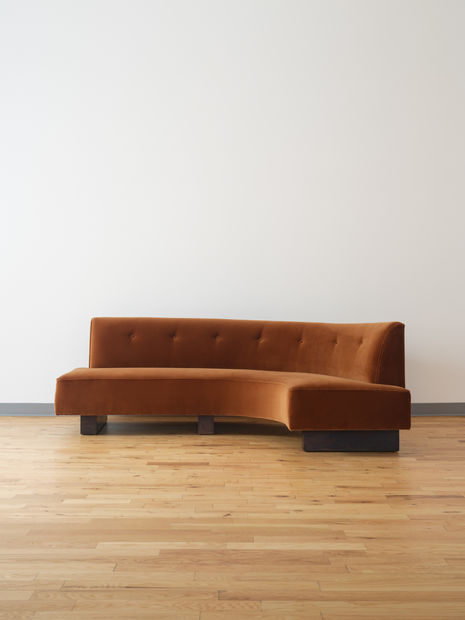
    SOFA, 1960s

    Made for a private commission, it is a unique piece from the 1960s featuring a rosewood base and comfortable L-shaped cushions. Newly upholstered with refined cotton velvet by Loro Piana. This rare piece contains its original manufacturer’s stamp. Its organic, fluid curves are a fundamental feature of Joaquim Tenreiro’s work and can be appreciated in a few other models.

  • CURVED ARMCHAIR, 1948 Designed in 1948, this pair of Curved Armchairs by Joaquim Tenreiro embodies the essence of Brazilian mid-century... CURVED ARMCHAIR, 1948 Designed in 1948, this pair of Curved Armchairs by Joaquim Tenreiro embodies the essence of Brazilian mid-century... CURVED ARMCHAIR, 1948 Designed in 1948, this pair of Curved Armchairs by Joaquim Tenreiro embodies the essence of Brazilian mid-century... CURVED ARMCHAIR, 1948 Designed in 1948, this pair of Curved Armchairs by Joaquim Tenreiro embodies the essence of Brazilian mid-century...

    CURVED ARMCHAIR, 1948

    Designed in 1948, this pair of Curved Armchairs by Joaquim Tenreiro embodies the essence of Brazilian mid-century modern design. The soft, organic lines defining the sculptural form combine elegance and comfort, while the solid rosewood feet reflect Tenreiro’s commitment to noble materials and refined craftsmanship. Reupholstered in mohair by Rogers & Goffigon, these armchairs express the dialogue between tradition and modernity that shaped the language of Brazilian furniture design.


    SCULPTURE, 1970s

    By the late 1960s, Joaquim Tenreiro began shifting his focus from design to art, returning to the studio practice that had always accompanied his career. In these works, which he called sculpaintings, he explored abstraction and geometry through the tactile language of craft, translating his modernist sensibility into pure form.
  • BLOCH DESK, 1965 The Bloch Editors Desk is a signature design by Joaquim Tenreiro, produced in two versions: one with... BLOCH DESK, 1965 The Bloch Editors Desk is a signature design by Joaquim Tenreiro, produced in two versions: one with... BLOCH DESK, 1965 The Bloch Editors Desk is a signature design by Joaquim Tenreiro, produced in two versions: one with...

    BLOCH DESK, 1965

    The Bloch Editors Desk is a signature design by Joaquim Tenreiro, produced in two versions: one with a glass top and another with a veneer top. The piece was created for Bloch Editores S.A., a Brazilian publishing house founded in 1952 and active until 2000, where Tenreiro was responsible for furnishing the interiors.
    Archival images show that Tenreiro also designed furniture for the home of Adolpho Bloch, the company’s founder, including some of his most iconic creations. This desk bears a metal tag with an identification number. Composed of a rectangular box with three drawers, a rosewood structure, and a painted glass top, the piece exemplifies Tenreiro’s reductive approach to form — achieved through the disciplined use of rectangular volumes and straight lines.


    OFFICE CHAIR, 1950s

    Designed in the 1950s by Joaquim Tenreiro, this piece is a rare office version of Tenreiro’s Leve Chair, one of his most iconic models, originally designed in 1942. The piece combines modernist rigor and elegance. The iron frame provides a precise, architectural structure, while the rosewood armrests — set at the perfect height — offer comfort and balance, complemented by soft leather upholstery. Developed with both comfort and proportion in mind, it reflects Tenreiro’s ability to merge industrial materials with artisanal sensibility.

  • COFFEE TABLE, 1955 Designed in 1955, this coffee table by Joaquim Tenreiro reveals his command of structure and proportion. The... COFFEE TABLE, 1955 Designed in 1955, this coffee table by Joaquim Tenreiro reveals his command of structure and proportion. The... COFFEE TABLE, 1955 Designed in 1955, this coffee table by Joaquim Tenreiro reveals his command of structure and proportion. The... COFFEE TABLE, 1955 Designed in 1955, this coffee table by Joaquim Tenreiro reveals his command of structure and proportion. The...

    COFFEE TABLE, 1955

    Designed in 1955, this coffee table by Joaquim Tenreiro reveals his command of structure and proportion. The sculptural rosewood base, shaped in looping, continuous lines, supports a glass top that appears to hover above it. The result is both rigorous and fluid — a study in material clarity and the lightness that defines Tenreiro’s language.


    DINING CHAIRS, 1950s

    Made of solid rosewood with slatted backs and cane seats, these chairs were designed in the 1950s. As in many of Tenreiro’s works, lightness is not only a matter of weight but of grace and spatial balance. Here, harmony is achieved through precise details — the symmetrical proportions (width, depth, and seat height share the same dimension) and the subtle curve of the backrest, almost imperceptible when viewed from the front.

  • LUCAS RECCHIA

  • Lucas Recchia (b. 1992, Southern Brazil) is one of the leading voices in contemporary Brazilian design. Trained as an architect,...
    Lucas Recchia (b. 1992, Southern Brazil) is one of the leading voices in contemporary Brazilian design. Trained as an architect, Recchia launched his career in 2018 and quickly gained recognition as the first Brazilian designer to develop innovative glass techniques specifically for furniture. His work bridges traditional craftsmanship and contemporary experimentation, exploring the expressive potential of glass, bronze, aluminum, and Brazilian stones.
    Recchia’s pieces are characterized by organic geometries, patinated surfaces, and tactile intimacy, merging artisanal precision with experimental form. Unlike many of his contemporaries, he prioritizes permanence over trend, creating works designed to age gracefully and endure across generations. His practice has been incorporated into boutiques for Off-White, Louis Vuitton, and Dior, and acquired by leading architects and designers including Kelly Wearstler, Sig Bergamin, Steven Harris, and Marcio Kogan. In 2022, he was recognized in Forbes’s "30 Under 30" list in Architecture & Design.
    In dialogue with Brazil’s design heritage, Recchia expands upon the values established by mid-century masters such as Joaquim Tenreiro. While Tenreiro’s work is celebrated for its elegance, precision, and mastery of wood, Recchia reinterprets these foundational principles through contemporary materials and processes, blurring the boundaries between functionality and sculpture. His work underscores a continuum in Brazilian design — one that honors its traditions while boldly exploring new forms, materials, and techniques, ensuring its relevance for future generations.

  • Mirror, 2024 (Material Distortion) Part of the Material Distortion series, this mirror exemplifies Lucas Recchia’s approach to modularity, transformation, and... Mirror, 2024 (Material Distortion) Part of the Material Distortion series, this mirror exemplifies Lucas Recchia’s approach to modularity, transformation, and...

    Mirror, 2024 (Material Distortion)

    Part of the Material Distortion series, this mirror exemplifies Lucas Recchia’s approach to modularity, transformation, and sculptural experimentation. Using only six basic ring shapes— four rounded and two rectangular—in bronze or aluminum, Recchia creates an assemblage system capable of evolving into multiple typologies. These forms can give rise to side tables, coffee tables, vases, chandeliers, trays, consoles, and mirrors, each configuration revealing a new perspective on space and function. Every piece is unique and made to order, reflecting Recchia’s meticulous attention to materiality and his ongoing exploration of form.


    Helo Console Table, 2025

    Helo combines a bronze cast base and a fused glass top, two complex techniques mastered by Lucas Recchia. Through an intuitive process, curved bronze rods intersect to support the glass, with one rod extending through the surface, subtly challenging functional expectations. The structure balances material weight with visual lightness, transforming a utilitarian object into an exploration of form, tension, and spatial presence.

  • Morfa Collection Morfa is Lucas Recchia’s inaugural collection, conceived in 2019. Over the years, it has evolved through unique commissions... Morfa Collection Morfa is Lucas Recchia’s inaugural collection, conceived in 2019. Over the years, it has evolved through unique commissions... Morfa Collection Morfa is Lucas Recchia’s inaugural collection, conceived in 2019. Over the years, it has evolved through unique commissions... Morfa Collection Morfa is Lucas Recchia’s inaugural collection, conceived in 2019. Over the years, it has evolved through unique commissions... Morfa Collection Morfa is Lucas Recchia’s inaugural collection, conceived in 2019. Over the years, it has evolved through unique commissions... Morfa Collection Morfa is Lucas Recchia’s inaugural collection, conceived in 2019. Over the years, it has evolved through unique commissions...

    Morfa Collection

    Morfa is Lucas Recchia’s inaugural collection, conceived in 2019. Over the years, it has evolved through unique commissions and new versions for special projects. The collection explores transformation through the interplay of glass, bronze, and patina, reflecting Recchia’s ongoing experimentation with material, form, and light.
    The Morfa No. 09 Bench (2023), cast in solid bronze and produced in a limited edition of 20 plus 4 artist’s proofs, exemplifies the collection’s sculptural approach, balancing weight and proportion while highlighting the material’s natural texture.


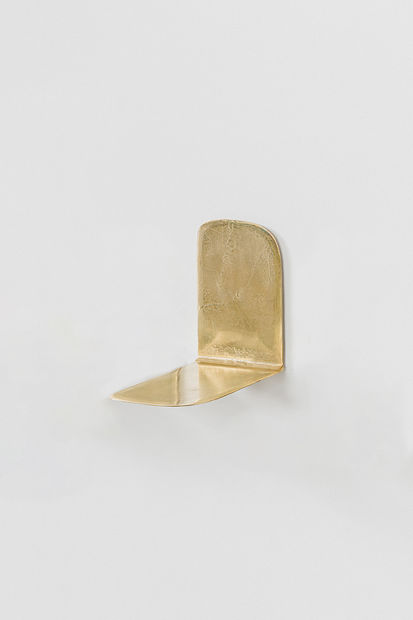
    Lâmina, 2025 – Morfa Collection

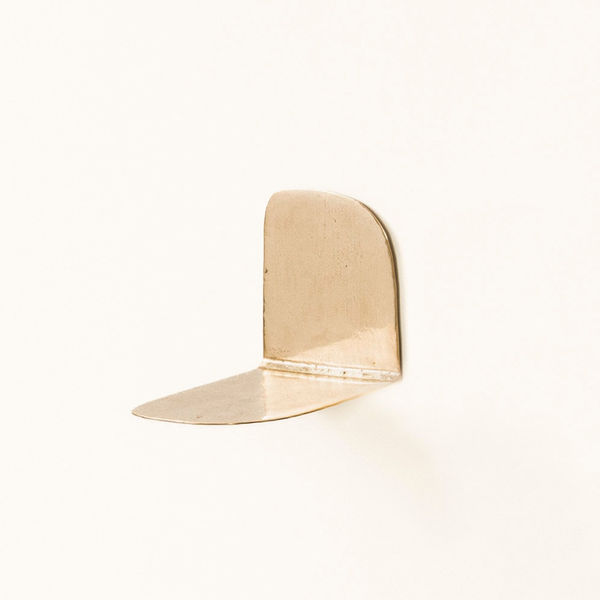
    Lâmina is a series of individual small shelves within the Morfa Collection, each with its own unique form and proportion. Cast in bronze, the shelves are available in a range of finishes and patinas.
    The pieces reflect Recchia’s refined exploration of material tactility and minimalist expression. Softly curved planes and subtly irregular surfaces reveal the traces of handcraft, giving each shelf a sculptural, organic presence. Whether displayed individually or grouped, Lâmina transforms functional objects into artworks that balance light, form, and the expressive potential of bronze.

  • Eche Collection, 2024 The Eche Collection is Lucas Recchia’s first series of seating, first presented in his solo show Elemental... Eche Collection, 2024 The Eche Collection is Lucas Recchia’s first series of seating, first presented in his solo show Elemental...

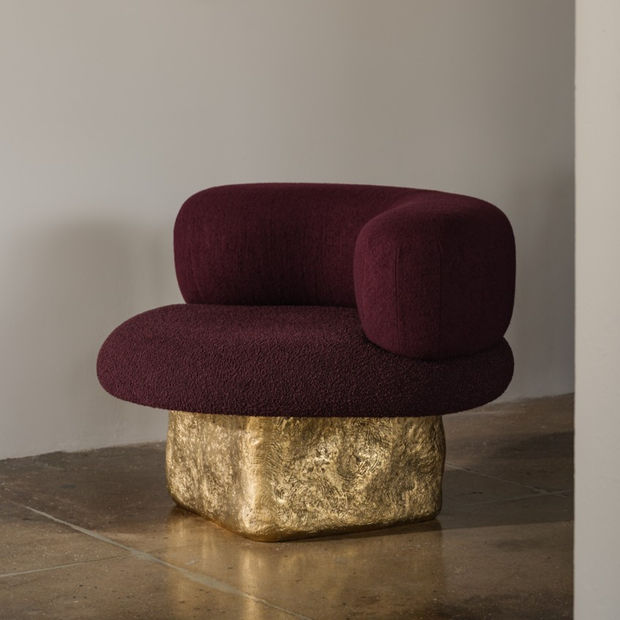
    Eche Collection, 2024

    The Eche Collection is Lucas Recchia’s first series of seating, first presented in his solo show Elemental Echoes in 2024. The collection includes three models: armchair, chaise lounge, and sofa. Cast bronze bases support the seats, balancing visual lightness with material solidity. Each piece explores the interaction of form, material, and space, transforming seating into sculptural, tactile objects crafted to endure.


    Coria, 2025

    Coria (2025) is the first sconce conceived by Lucas Recchia, and Bossa is pleased to launch it at Salon Art + Design 2025. The piece embodies a refined, sculptural aesthetic and allows multiple installation possibilities, whether as a single element, in pairs, or in groups. The sconce features two distinct surfaces, formed in molds and then cast in bronze or aluminum. Its subtle curvature produces intriguing reflections and nuanced shades. Known for his meticulous construction and high-quality execution, Recchia creates works that convey both sculptural character and tactile presence, transforming functional objects into refined, collectible art pieces.

  • CAVO SIDE TABLE, 2025 Cavo is Side Table (2025) cast bronze with a red patina, the piece follows Lucas Recchia’s... CAVO SIDE TABLE, 2025 Cavo is Side Table (2025) cast bronze with a red patina, the piece follows Lucas Recchia’s... CAVO SIDE TABLE, 2025 Cavo is Side Table (2025) cast bronze with a red patina, the piece follows Lucas Recchia’s...

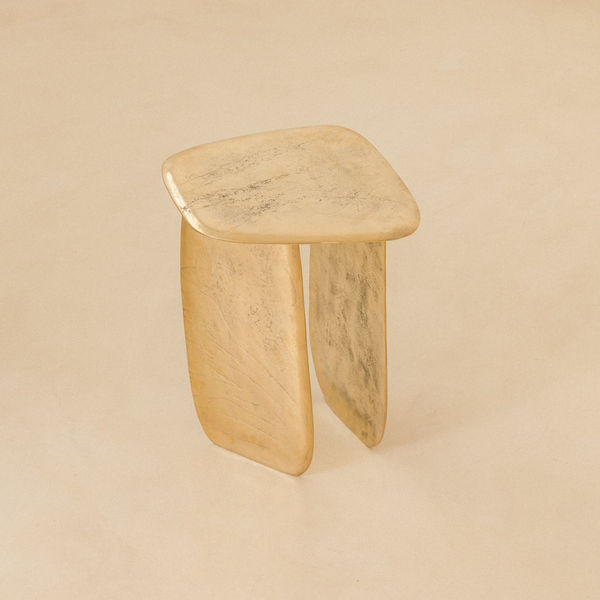
    CAVO SIDE TABLE, 2025

    Cavo is Side Table (2025) cast bronze with a red patina, the piece follows Lucas Recchia’s exploration of form, surface, and balance. Known for merging traditional casting techniques with a contemporary sculptural sensibility, the Brazilian designer imbues the piece with a tactile presence that feels both grounded and fluid.

  • EXPANDING THE DIALOGUE

  • CUSHIONS