Bossa Furniture
Skip to main content
  • Menu
  • our collection
  • artists
  • shop
  • fabric collection
  • exhibitions
  • blog
  • press
  • about us
  • contact
Cart
0 items $
Checkout

Item added to cart

View cart & checkout
Continue shopping
Menu

SAVAGE: SP-Arte 2026

Past viewing_room
8 - 12 April 2026
  • SAVAGE

    Instinctive Comfort

    For our debut at SP-Arte, we have made a conscious departure: no rosewood, no cane. Our research breaks away from the canonical boundaries of Brazilian Modernism to chart new geographies—deeper territories of desire. Our vision draws from the hedonistic interiors of Gabriella Crespi, the subversive rigor of Italian masters, and the sensory epiphany of Yves Saint Laurent upon discovering the raw beauty of Marrakech.


    SAVAGE is a manifesto of unfiltered instinct. It mirrors the 1970s Italian subversion of domestic life, where the rigid codes of bourgeois etiquette were discarded in favor of a new, untamed comfort. This curation dissolves that historical rigidity through "improper sitting". Where the industrial precision of Afra & Tobia Scarpa or Vico Magistretti meets the body, it does not impose form; it invites a return to a natural state of surrender.


    This is a territory of friction, where Milanese design collides with the textile architecture of Beni Rugs. Curated by Bossa, luxury is embodied in the preservation of the rare: high-altitude wool of extraordinary softness, retaining its natural richness through unique processes that Beni sustains with profound dedication. This is the luxury of cultural layers—a singular craft carrying years of heritage, anchored in a legacy of uncompromising excellence.


    Under the historical aegis of Lina Bo Bardi and Ricardo Fasanello, we celebrate the long-awaited Brazilian debut of India Mahdavi. India does not merely introduce objects; she instills a new grammar of curves and color that challenges rustic sobriety, establishing a definitive dialogue between playful lyricism and technical precision.


    SAVAGE is the refinement that finally grants us permission to be wild.


    Coming soon

    8–12 de abril de 2026

    Pavilhão da Bienal, Parque Ibirapuera

    São Paulo, Brazil
    Booth DS23

     
  • (Larger version of this image opens in a popup).
    (Larger version of this image opens in a popup).
    (Larger version of this image opens in a popup).
    (Larger version of this image opens in a popup).
    (Larger version of this image opens in a popup).
    (Larger version of this image opens in a popup).
    (Larger version of this image opens in a popup).
    (Larger version of this image opens in a popup).
    (Larger version of this image opens in a popup).
  • ITALIAN MASTERS

  • AFRA E TOBIA SCARPA, 1937–2011

    AFRA E TOBIA SCARPA

    1937–2011


    Afra Scarpa and Tobia Scarpa formed one of the most significant duos in postwar Italian design and architecture. Both graduated from the IUAV in Venice, and began collaborating at a young age, developing a joint practice defined by technical rigor and a deep sensitivity to materials. Over the decades, they built a distinctive language that bridges artisanal tradition and industrial innovation.


    The duo stood out in both architecture and furniture design, collaborating with major Italian companies such as Cassina, B&B Italia, and Flos. Among their most iconic works are pieces that explore the relationship between structure, form, and materiality, demonstrating a profound understanding of construction. Their work also includes architectural projects such as residences and industrial buildings, always guided by meticulous attention to detail.


    Afra and Tobia Scarpa established an approach in which design and architecture are inseparable, valuing craftsmanship even within large-scale production. Their work reflects a constant search for balance between functionality and expression, tradition and contemporaneity, positioning them as central figures in 20th-century Italian design.


    “Designing is about deeply understanding the material and respecting its nature.”

  • (Larger version of this image opens in a popup).
    (Larger version of this image opens in a popup).
    (Larger version of this image opens in a popup).
    (Larger version of this image opens in a popup).
    (Larger version of this image opens in a popup).
    (Larger version of this image opens in a popup).
    (Larger version of this image opens in a popup).
    • Afra and Tobia Scarpa Soriana Lounge Chair (2 units - pair), 1960s
      Afra and Tobia Scarpa
      Soriana Lounge Chair (2 units - pair), 1960s
    • Afra and Tobia Scarpa Soriana Sofa, 1960s
      Afra and Tobia Scarpa
      Soriana Sofa, 1960s
    • Afra and Tobia Scarpa Chair model 925 (6 units), 1966
      Afra and Tobia Scarpa
      Chair model 925 (6 units), 1966
    • Afra and Tobia Scarpa Table Lamp (pair), 1960s
      Afra and Tobia Scarpa
      Table Lamp (pair), 1960s
  • LINA BO BARDI, 1914–1992

    LINA BO BARDI

    1914–1992

    Lina Bo Bardi was one of the leading modernist architects in Brazil, also working as a designer, scenographer, and editor. Born in Rome in 1914, she trained as an architect and worked in Milan with Gio Ponti before moving to Brazil in 1947 with Pietro Maria Bardi. In São Paulo, she developed a body of work that merged European rationalism with Brazilian popular culture, adopting the country as her “chosen homeland.”


    Among her most emblematic projects are the Glass House, the MASP with its iconic free-span structure, and the SESC Pompeia, which transformed a former factory into a cultural center. Her work emphasized simple materials, artisanal techniques, and the collective use of space, reflecting a strong social commitment.


    Influenced by Le Corbusier and Antonio Gramsci, Lina developed the concept of “poor architecture,” critiquing elitism and proposing a more accessible and socially integrated practice. Internationally recognized, she was posthumously awarded the Golden Lion at the Venice Biennale in 2021, consolidating her legacy as a central figure in contemporary architecture.


    “Beauty itself does not exist. I did not seek beauty, I sought freedom.”


  • (Larger version of this image opens in a popup).
    (Larger version of this image opens in a popup).
    (Larger version of this image opens in a popup).
    (Larger version of this image opens in a popup).
    (Larger version of this image opens in a popup).
    (Larger version of this image opens in a popup).
    • Lina Bo Bardi and Giancarlo Palanti Zig Zag Armchair, 1948
      Lina Bo Bardi and Giancarlo Palanti
      Zig Zag Armchair, 1948
    • Lina Bo Bardi Chair MASP 7th April, 1947
      Lina Bo Bardi
      Chair MASP 7th April, 1947
    • Lina Bo Bardi Sesc Pompeia Stool, 1979-1980
      Lina Bo Bardi
      Sesc Pompeia Stool, 1979-1980
    • Lina Bo Bardi Stool, 1951
      Lina Bo Bardi
      Stool, 1951
  • GIANCARLO PALANTI, 1906-1977

    GIANCARLO PALANTI

    1906-1977

    Giancarlo Palanti was an architect and designer who built his career between Italy and Brazil, acting as a bridge between the two contexts. Born in Milan, he was part of the Italian modernist avant-garde alongside figures such as Franco Albini and Ignazio Gardella, developing a collaborative practice early on. After nearly two decades working in Italy, he moved to Brazil during the war, settling in São Paulo, where he contributed to the formation of modern architecture in the country, collaborating with figures like Lina Bo Bardi and Henrique Mindlin.


    His work spans urbanism, architecture, and design, reflecting an integrated and modern vision. His projects include urban proposals in Milan and for Brasília, as well as significant buildings in both cities. In design, he stood out for creating furniture adapted to its context—using industrial materials in Italy and wood in Brazil—establishing himself as one of the rare pioneers of modern design in both countries. After decades out of production, his furniture has been rediscovered and reissued by dpot, reaffirming the relevance of his legacy.


    “The project must respond to its time, the available materials, and the lives of the people who inhabit it.”


  • VICO MAGISTRETTI, 1920–2006

    VICO MAGISTRETTI

    1920–2006

    Vico Magistretti (Milan, October 6, 1920 – September 19, 2006) was one of the most influential Italian designers and architects of the 20th century, known for experimental yet harmonious projects ranging from decorative objects to architectural works. Born in Milan into a family of architects—his father, Pier Giulio Magistretti, and his grandfather, Gaetano Besia—he began his studies at the Politecnico di Milano in 1939, interrupting them during World War II when he moved to Switzerland. There, he taught, studied in Lausanne, and developed a close relationship with Ernesto Nathan Rogers, an important influence on his formation.


    Upon returning to Milan in 1945, he completed his degree and collaborated with figures such as Achille Castiglioni and Franco Albini, while also developing projects for the Triennale di Milano. He created iconic pieces such as the Carimate chair for Cassina, the Eclisse lamp for Artemide, and the Atollo lamp for Oluce, receiving numerous awards including the Compasso d’Oro. Alongside his design work, he carried out architectural projects in Milan and taught for two decades at the Royal College of Art in London, establishing a lasting legacy in modern design and architecture.


    “Look at usual things with unusual eyes.”


    • Lina Bo Bardi and Giancarlo Palanti Zig Zag Armchair, 1948
      Lina Bo Bardi and Giancarlo Palanti
      Zig Zag Armchair, 1948
    • Vico Magistretti Maralunga Sofa, 1960s
      Vico Magistretti
      Maralunga Sofa, 1960s
  • BENI RUGS

  • BENI RUGS

    BENI RUGS

    Beni Rugs is a brand founded in 2018 by Robert Wright and Tiberio Lobo-Navia with the goal of transforming traditional Moroccan rug production into a more sustainable, ethical, and collaborative practice. From the outset, their mission has been to bring economic stability and recognition to a craft historically shaped by informality, placing artisans at the center of the process and acknowledging them as creators rather than mere makers.


    Based in Tameslouht, near Marrakech, the brand brings together all stages of production under one roof, prioritizing handwork and transparency. Their rugs are created using ancestral techniques passed down through generations, combined with a contemporary design approach. Beni advocates for a model where tradition and innovation coexist, ensuring fair working conditions, dignified wages, and an environment that values time, care, and the quality of craftsmanship.


    More than preserving tradition, the brand seeks to reinterpret it, creating pieces that engage with the present while maintaining their cultural roots. By merging analog processes with a forward-looking vision, Beni Rugs proposes a new narrative for design—one in which the artisanal is seen as the future rather than the past, and where each rug carries not only material, but also stories, identities, and human connections.


    “Our studio is a place where tradition bends, but never breaks, merging analog art forms with forward-looking values.”

  • (Larger version of this image opens in a popup).
    (Larger version of this image opens in a popup).
    (Larger version of this image opens in a popup).
    (Larger version of this image opens in a popup).
    • Beni Rugs Boundaries, 2025
      Beni Rugs
      Boundaries, 2025
    • Beni Rugs Deco, 2026
      Beni Rugs
      Deco, 2026
    • Beni Rugs Meridian Runner, 2025
      Beni Rugs
      Meridian Runner, 2025
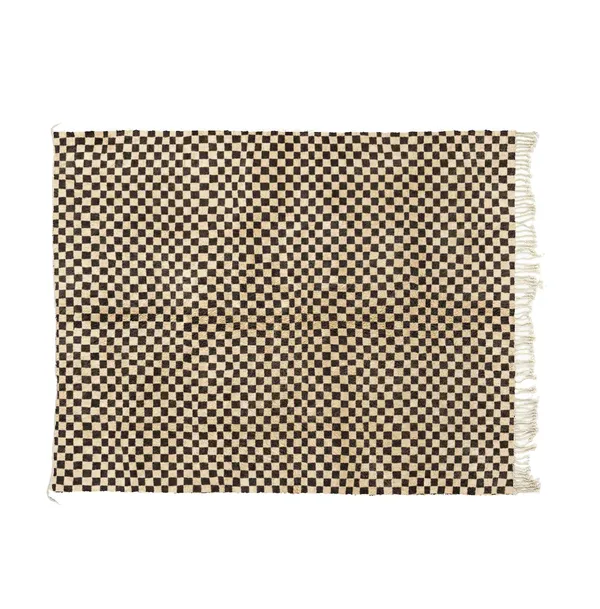
    • Beni Rugs Microcheck, 2026
      Beni Rugs
      Microcheck, 2026
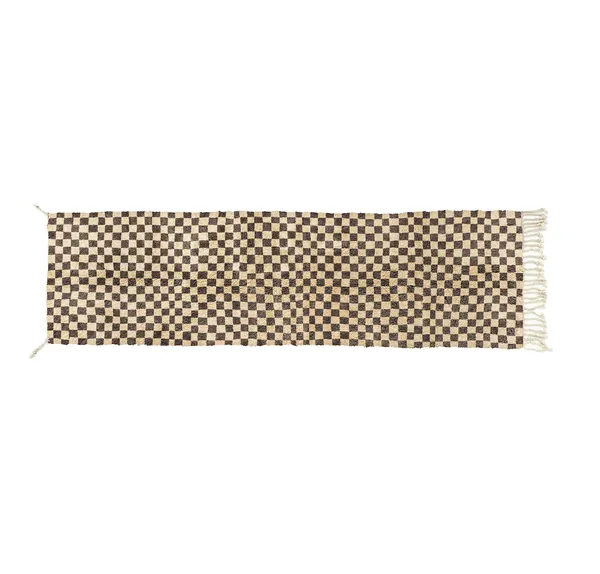
    • Beni Rugs Microcheck Runner, 2026
      Beni Rugs
      Microcheck Runner, 2026
    • Beni Rugs Solid Oat, 2026
      Beni Rugs
      Solid Oat, 2026
  • INDIA MAHDAVI

  • INDIA MAHDAVI, 1961

    INDIA MAHDAVI

    1961

    India Mahdavi is an Iranian-French designer and architect internationally recognized for her bold use of color, playful forms, and a sensory approach to design. Born in Tehran in 1962, she grew up between different countries—including Paris and New York—which deeply shaped her multicultural aesthetic. She studied architecture and design at institutions such as the École des Beaux-Arts and the Parsons School of Design before beginning her career in renowned studios and later founding her own practice in Paris in 1999.


    Her work spans architecture, interiors, furniture, and scenography, defined by a vibrant and sophisticated visual language often described as “polychromatic.” Mahdavi gained prominence with iconic projects such as the Sketch in London, particularly its famous pink-toned Gallery, as well as through collaborations with fashion and luxury brands. Her approach emphasizes the emotional experience of spaces, creating immersive environments that balance humor, elegance, and cultural identity.


    Throughout her career, India Mahdavi has established herself as one of the most original voices in contemporary design, exploring the narrative potential of color and form. Her work challenges traditional minimalism by proposing an expressive and accessible aesthetic, in which design acts as a tool for connecting culture, memory, and sensory experience.


    “ I will probably be remembered as someone who uses color as her own language. The language of freedom.”


  • (Larger version of this image opens in a popup).
    (Larger version of this image opens in a popup).
    (Larger version of this image opens in a popup).
    (Larger version of this image opens in a popup).
    (Larger version of this image opens in a popup).
    (Larger version of this image opens in a popup).
    (Larger version of this image opens in a popup).
    (Larger version of this image opens in a popup).
    • India Mahdavi Stromboli
      India Mahdavi
      Stromboli
    • India Mahdavi Stromboli
      India Mahdavi
      Stromboli
    • India Mahdavi Piña colada coffee table
      India Mahdavi
      Piña colada coffee table
  • BRAZILIAN DESIGNERS

  • RENATA CORREA

    RENATA CORREA

    Stylist and image consultant. With a degree in Advertising, Renata Corrêa previously owned a design agency focused on fashion clients before dedicating herself fully to her career as a stylist. Her work is especially defined by an in-depth research process and the development of exclusive looks tailored to each project.


    As an image consultant, she provides comprehensive guidance, covering everything from reference research to sourcing suppliers, from concept to production, remaining involved in every stage of the process.


    She has worked with major brands in the national market and with high-circulation publications such as Harper’s Bazaar, Elle, Vogue Brasil, Vogue Italia, FFW, and CR Fashion Book, among others.


    Her interests and further studies in interior design, painting, and art history allow her to merge these fields, bringing them into her work as a stylist and consultant in a highly authorial way.


  • (Larger version of this image opens in a popup).
    (Larger version of this image opens in a popup).
    (Larger version of this image opens in a popup).
    (Larger version of this image opens in a popup).
    (Larger version of this image opens in a popup).
    (Larger version of this image opens in a popup).
    (Larger version of this image opens in a popup).
    (Larger version of this image opens in a popup).
    (Larger version of this image opens in a popup).
    • Bossa Home Collection Tiger, 2026
      Bossa Home Collection
      Tiger, 2026
    • Bossa Home Collection Tiger, 2026
      Bossa Home Collection
      Tiger, 2026
    • Bossa Home Collection Charcoal, 2026
      Bossa Home Collection
      Charcoal, 2026
    • Bossa Home Collection Charcoal, 2026
      Bossa Home Collection
      Charcoal, 2026
    • Bossa Home Collection Kayar Charcoal, 2026
      Bossa Home Collection
      Kayar Charcoal, 2026
    • Bossa Home Collection Kayar Charcoal, 2026
      Bossa Home Collection
      Kayar Charcoal, 2026
    • Bossa Home Collection Tome Wood, 2026
      Bossa Home Collection
      Tome Wood, 2026
    • Bossa Home Collection Tome Wood, 2026
      Bossa Home Collection
      Tome Wood, 2026
    • Bossa Home Collection Curry, 2026
      Bossa Home Collection
      Curry, 2026
    • Bossa Home Collection Curry, 2026
      Bossa Home Collection
      Curry, 2026
    • Bossa Home Collection Leon, 2026
      Bossa Home Collection
      Leon, 2026
    • Bossa Home Collection Leon, 2026
      Bossa Home Collection
      Leon, 2026
    • Bossa Home Collection Jungle, 2026
      Bossa Home Collection
      Jungle, 2026
    • Bossa Home Collection Jungle, 2026
      Bossa Home Collection
      Jungle, 2026
    • Bossa Home Collection Dark Amulet, 2026
      Bossa Home Collection
      Dark Amulet, 2026
    • Bossa Home Collection Dark Amulet, 2026
      Bossa Home Collection
      Dark Amulet, 2026
    • Bossa Home Collection Fluffly, 2026
      Bossa Home Collection
      Fluffly, 2026
    • Bossa Home Collection Fluffly, 2026
      Bossa Home Collection
      Fluffly, 2026
  • RICARDO FASANELLO, 1930-1993

    RICARDO FASANELLO

    1930-1993

    Ricardo Fasanello was born in São Paulo in 1930 and showed an uncommon talent for creation from an early age. At 14, he designed and built a sailboat, and by 18 he was already developing his own lofts. A young dandy driven by speed and excitement, he nearly lost his life in a serious accident while driving his Porsche 550 Spyder on the road between São Paulo and Rio de Janeiro. After meeting his future wife, Countess Olivia Tarnowska, he slowed his pace and moved to a bohemian neighborhood in Rio, where he divided his time between exotic pets and his passion for designing and building race cars.


    Fasanello’s work is defined by functionality and the use of artisanal tools applied to industrial design, resulting in furniture that combines a distinctly Brazilian aesthetic with an effortless sophistication. In his atelier, the creative process unfolds through making itself, incorporating solutions that emerge during production. With strong technical command of materials and a singular sensitivity, he harmonized contrasts and created innovative forms, such as his iconic rounded, rotating armchairs designed to encourage conversation.


    “The material demands a shape, or the shape indicates the material—the designer is a prisoner of this relationship.”


  • (Larger version of this image opens in a popup).
    (Larger version of this image opens in a popup).
    (Larger version of this image opens in a popup).
    (Larger version of this image opens in a popup).
    (Larger version of this image opens in a popup).
    • Ricardo Fasanello Anel 80’s Armchair (1 unit), 1970
      Ricardo Fasanello
      Anel 80’s Armchair (1 unit), 1970
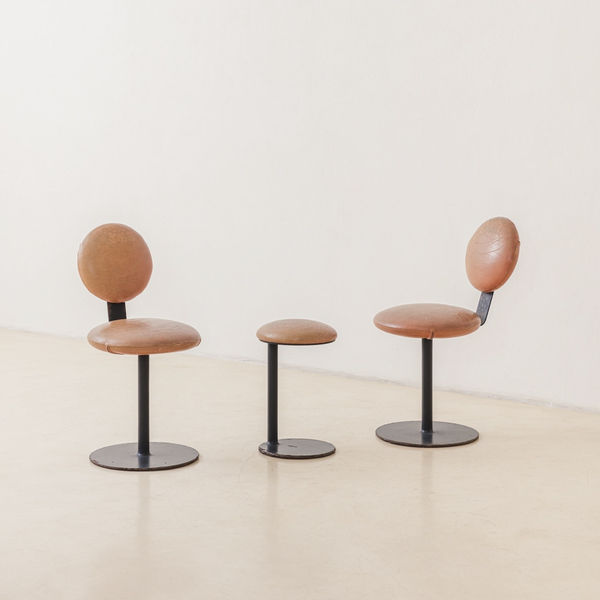
    • Ricardo Fasanello Espaço Chairs (2 units), 1974
      Ricardo Fasanello
      Espaço Chairs (2 units), 1974

JOIN OUR MAILING LIST

Sign Up

* denotes required fields

We will process the personal data you have supplied in accordance with our privacy policy (available on request). You can unsubscribe or change your preferences at any time by clicking the link in our emails.

Artists
Mid century
Contemporary
Exhibitions

Blog

Contacts

About us

Careers


NEW YORK GALLERY 

210 11th Avenue, Suite 403

Chelsea, New York

USA.10001

(646) 901-6808

shop@bossafurniture.com


HOURS AND VISITS
Tuesday to Friday, 11am - 5pm
Saturday – by appointment only


BOSSA FLAGSHIP 

R. Maria José, 158

Bela Vista, São Paulo

01324-010
+55 11 94533-6975
saopaulo@bossafurniture.com


HOURS AND VISITS
Tuesday to Friday, 11am - 5pm
Saturday – by appointment only


MESSAGE US

Facebook, opens in a new tab.
Instagram, opens in a new tab.
Artsy, opens in a new tab.
1stdibs, opens in a new tab.
Manage cookies
Terms & Conditions
Copyright © BOSSA FURNITURE
Online Viewing Rooms by Artlogic

This website uses cookies
This site uses cookies to help make it more useful to you. Please contact us to find out more about our Cookie Policy.

Manage cookies
Reject non essential
Accept

Cookie preferences

Check the boxes for the cookie categories you allow our site to use

Cookie options
Required for the website to function and cannot be disabled.
Improve your experience on the website by storing choices you make about how it should function.
Allow us to collect anonymous usage data in order to improve the experience on our website.
Allow us to identify our visitors so that we can offer personalised, targeted marketing.
Save preferences